



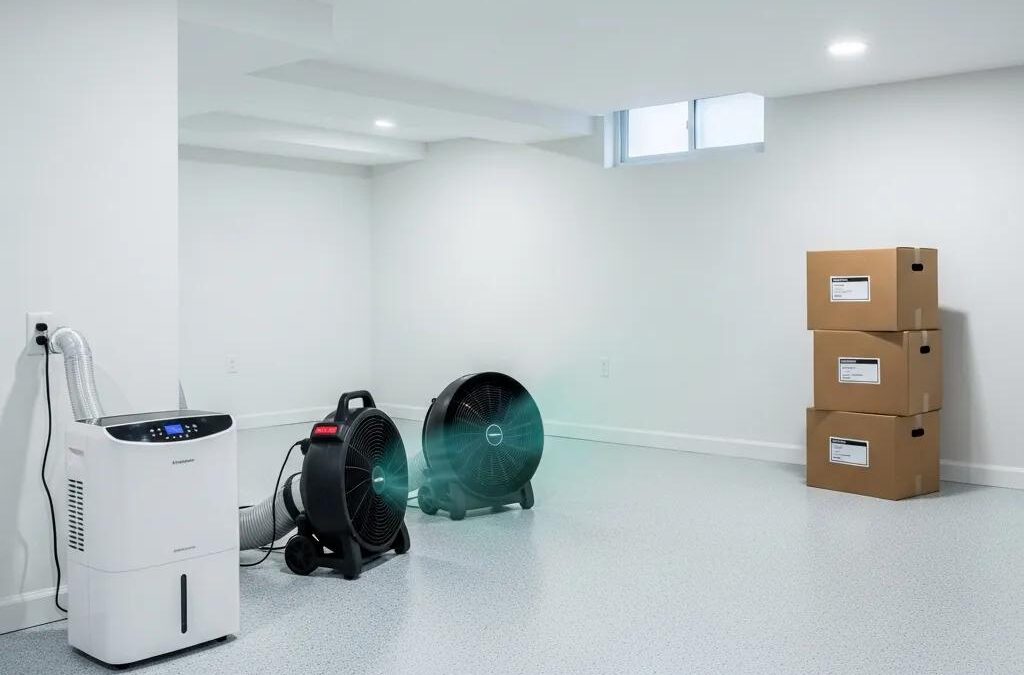
Water damage in a basement can cause structural deterioration and health hazards if not addressed. This guide summarizes the practical steps to dry a basement: safety first, remove water, dry materials, prevent mold, and know when to call professionals.
Safety First
Prioritize safety before any drying work. Water can create electrical hazards and expose occupants to contaminants. Follow basic precautions to reduce risk:
- Turn Off Electricity : Cut power to the affected area to avoid electrical shocks.
- Remove Standing Water : When safe, remove standing water with buckets or a wet/dry vacuum.
- Avoid Contact with Contaminated Water : Wear gloves and boots to limit exposure.
These steps reduce injury risk during extraction and drying.
Contact Professionals
Professional restoration firms offer training and equipment that speed extraction and drying and reduce long-term risks.
- Expertise and Equipment : Technicians use industrial dehumidifiers and submersible pumps.
- Thorough Water Removal : Professionals locate and remove hidden moisture to limit mold.
- Health and Safety Assurance : They assess hazards and clear the area for re-entry.
For thorough restoration, contact a professional cleaning and restoration company specializing in water damage restoration services.
Water Extraction Techniques

Effective extraction is the first step. Common methods remove bulk water so drying can proceed:
- Submersible Pumps : Remove large volumes quickly.
- Vacuum Extraction : Wet/dry vacuums handle smaller amounts and residual moisture.
- Industrial-Grade Equipment : High-capacity pumps and vacuums speed the job.
Choosing the right method shortens drying time and limits secondary damage.
Assessment and Monitoring
After extraction, assess damage and set a moisture-monitoring plan to confirm materials are drying:
- Checking for Visible Signs : Inspect for stains, peeling paint, and warped flooring.
- Monitoring Moisture Levels : Use moisture meters to track air and material humidity.
- Assessing Severity of Damage : Determine if structural repairs or replacements are needed.
Regular checks verify progress and detect remaining moisture.
Structural Drying
Structural drying extracts moisture from building materials using airflow and dehumidification:
- Using Air Movers and Dehumidifiers : Circulate air and remove moisture from the environment.
- Ensuring Good Ventilation : Open windows and doors where safe to increase airflow.
- Monitoring Drying Progress : Check moisture readings until targets are reached.
Proper structural drying helps prevent mold and material degradation.
Prevent Mold Growth

Mold can appear within 24 to 48 hours after exposure. Use targeted steps to limit growth:
- Dry Areas Within 24-48 Hours : Aim to dry affected areas as quickly as possible.
- Use Dehumidifiers : Lower humidity to discourage mold.
- Consider Antimicrobial Treatments : Apply treatments where appropriate to inhibit spores.
These measures significantly reduce infestation risk.
Post-Extraction Cleanup
After drying, sanitize and restore the space to make it safe and usable:
- Sanitizing Affected Areas : Disinfect surfaces exposed to water.
- Restoring Safety : Remove hazards and confirm safe re-entry.
- Preventing Health Risks : Address mold and contaminant concerns.
A full cleanup completes the restoration process.
Insurance Assistance
Review your insurance coverage and collect documentation to support any claims:
- Check Homeowners or Renters Insurance : Know what your policy covers.
- Seek Assistance with Claims : Contact your insurer for filing guidance.
- Understand Coverage Options : Learn limits and exclusions to avoid surprises.
Proper documentation reduces financial uncertainty during recovery.
Prevent Future Issues
Reduce the chance of repeat water problems with routine maintenance and flood controls:
- Regular Inspections : Check for leaks and moisture frequently.
- Install Sump Pumps : Manage groundwater and reduce flooding risk.
- Maintain Drainage Systems : Keep gutters and downspouts clear and directed away from foundations.
Proactive measures protect your property over time.
Professional Help for Mold Remediation
For confirmed mold, remediation specialists provide containment, safe removal, and verification services:
- Set Up Containment Barriers : Prevent spores from spreading.
- Remove Damaged Materials : Safely dispose of unsalvageable items.
- Conduct Air Quality Testing : Verify the air is safe after remediation.
Licensed remediators reduce health risks and recurrence.
What Are the Key Signs of Basement Water Damage to Identify Early?
Early detection limits repair complexity and cost. Look for common indicators:
- Water Stains : Discoloration on walls or ceilings.
- Peeling Paint : Moisture beneath the surface.
- Damp Patches : Wet spots or a musty odor can indicate intrusion.
Spotting these signs prompts faster intervention.
How to Recognize Visible and Hidden Water Damage Indicators
Visible and concealed signs both matter. Watch for these clues:
- Musty Odors : Persistent smells often signal moisture.
- Unexplained Mold Growth : Mold in odd places suggests hidden wetness.
- Warped Flooring : Buckling or warping indicates subsurface damage.
Addressing these signs early prevents escalation.
Why Early Detection Prevents Mold and Structural Issues
Early detection matters because mold grows quickly, repairs are cheaper when small, and prompt fixes protect structural integrity:
- Mold Growth Timeline : Mold can develop rapidly within 24-48 hours.
- Cost Savings : Early action reduces repair costs.
- Structural Integrity Protection : Timely intervention preserves home structure.
Recognizing and acting on issues supports effective recovery.
What Are the Essential Steps for Drying Out a Basement After Flooding?
Follow a clear sequence to dry a flooded basement:
- Identify Water Source : Stop the source to prevent re-flooding.
- Use Powerful Pumps : Remove standing water quickly.
- Employ Air Movers : Use fans to speed evaporation and circulation.
These steps reduce drying time and limit damage.
How Does Professional Water Extraction Accelerate Basement Drying?
Professionals speed drying by removing water quickly, using industrial equipment, and improving air quality:
- Rapid Water Removal : Professionals can extract water faster than DIY.
- Use of Industrial-Grade Equipment : Advanced tools ensure thorough drying.
- Improved Indoor Air Quality : Removing moisture improves air conditions.
Hiring professionals often yields a more efficient restoration.
What Role Does Dehumidification Play in Effective Basement Drying?
Dehumidification removes air moisture, helping materials reach safe dryness and reducing mold risk:
- Preventing Mold Growth : Lower humidity inhibits mold.
- Enhancing Drying Process : Dehumidifiers accelerate drying by extracting moisture.
- Improving Air Quality : Lower humidity supports healthier indoor air.
Include dehumidification in any complete drying plan.
When Should You Choose Professional Water Damage Restoration Services?
Call professionals when damage is significant, odors persist, or health issues arise:
- Visible Damage Signs : Large or structural damage needs pros.
- Persistent Odors : Lingering smells may indicate hidden moisture.
- Health Concerns : Seek experts if mold affects occupants’ health.
Professionals document the process and ensure thorough restoration.
What Advanced Equipment Do Professionals Use for Basement Drying?
Restoration teams use purpose-built tools to remove water and humidity:
- Water Extraction Pumps : Designed for rapid removal.
- Industrial-Grade Dehumidifiers : Efficiently lower humidity.
- High-Velocity Air Movers : Improve circulation to speed drying.
Knowing the equipment highlights the value of professional services.
How Does Scheduling a Professional Service Ensure Complete Restoration?
Scheduling a restoration service combines fast water removal, mold prevention, and full cleanup:
- Efficient Water Removal : Professionals remove water thoroughly.
- Mold Prevention : Timely action limits mold growth.
- Comprehensive Cleanup : Pros restore and sanitize affected areas.
Professional engagement provides assurance of quality work.
How Can You Prevent Mold Growth After Basement Water Damage?
Prevent mold with swift action, humidity control, and regular checks:
- Swift Action : Address water immediately.
- Use of Dehumidifiers : Keep humidity low.
- Regular Inspections : Monitor for early signs.
These practices reduce the chance of mold return.
What Are the Health Risks of Mold in Damp Basements?
Mold exposure can cause respiratory problems, allergies, and longer-term health issues in sensitive individuals:
- Respiratory Issues : Spores can trigger asthma and breathing problems.
- Allergic Reactions : Sensitive people may react to mold exposure.
- Chronic Health Conditions : Prolonged exposure can worsen health over time.
Awareness of health risks supports prompt remediation.
Which Mold Prevention Techniques Are Recommended Post-Drying?
After drying, adopt measures to maintain a dry, mold-resistant environment:
- Thorough Drying : Confirm all areas are fully dry.
- Increase Air Circulation : Use fans and open windows when appropriate.
- Use Mold-Resistant Products : Choose mold-resistant paints and materials for repairs.
These techniques support long-term protection against mold.
Frequently Asked Questions
What should I do if I notice mold growth after drying my basement?
If mold appears, ventilate and wear protective gear. Small patches may be cleaned with detergent and water or an EPA-registered cleaner per instructions. For larger infestations, contact a professional remediation service.
How long does it typically take to dry out a basement after water damage?
Drying time depends on damage extent and methods; it often ranges from several days to a couple of weeks. Use dehumidifiers and high-velocity air movers and monitor moisture until targets are met.
Can I use my basement again immediately after drying it out?
Do not reoccupy until moisture is eliminated, surfaces are cleaned and sanitized, and there are no lingering odors or mold signs. Consider testing air quality if unsure.
What are the signs that I need professional help for water damage restoration?
Visible structural damage, persistent musty odors, or confirmed mold are clear signs to call restoration professionals, who have the tools and expertise for severe cases.
How can I ensure my basement remains dry after restoration?
Maintain dryness with regular inspections, sump pumps, proper drainage, dehumidifiers, and improved ventilation. Use mold-resistant materials during repairs.
What should I include in my insurance claim for water damage?
Include photos, an inventory of affected items, repair estimates, receipts for services, and a written account of the event. Contact your insurer for specific documentation needs.
Is it safe to use electrical appliances in a basement after water damage?
Do not use appliances until the area is fully dried and inspected by a qualified electrician to avoid shorts and electrocution risks.
Conclusion
Properly drying a basement protects structural integrity and occupant health. Follow safety steps, extract water, dry materials, prevent mold, and involve professionals when needed to ensure a complete, safe restoration. Learn more about water extraction in Madison from Steam Plus