


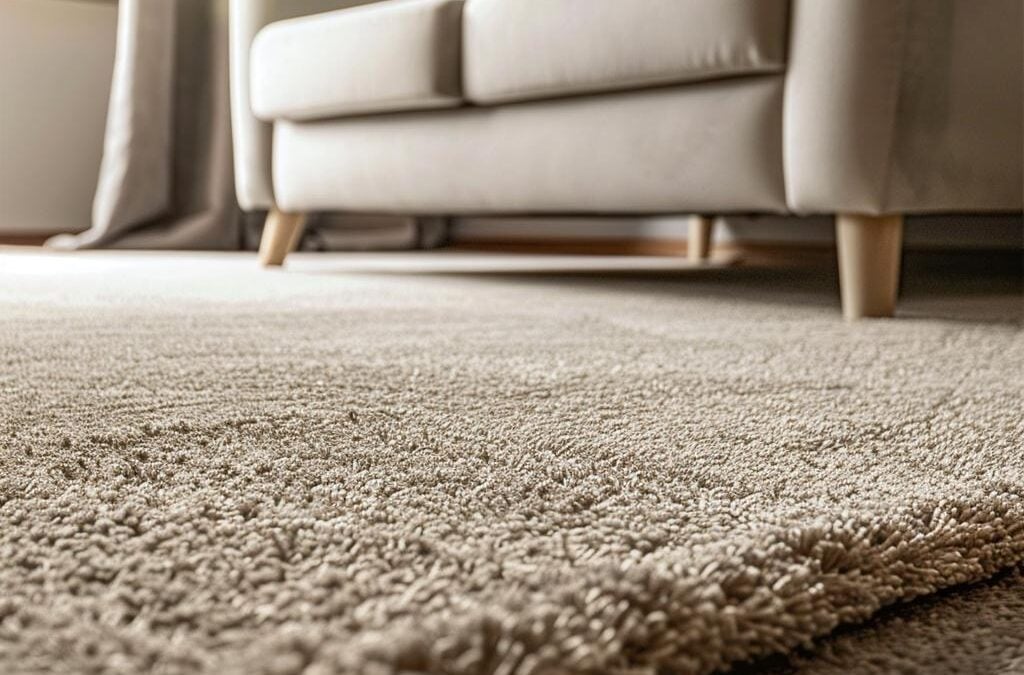
Commercial carpets deal with much more traffic than residential flooring. Employees, customers, deliveries, outdoor debris, food particles, and everyday spills can gradually push soil deeper into carpet fibers. Over time, this can leave offices, retail spaces, medical facilities, and other commercial buildings looking worn even when they are vacuumed regularly.
That is where commercial carpet cleaning becomes an important part of facility maintenance.
Professional carpet cleaning is not simply a matter of making flooring look better. The right cleaning method can help remove embedded soil, improve the appearance of high-traffic areas, manage spills and odors, and extend the useful life of commercial carpeting.
For businesses in Madison, WI, cleaning needs can also change throughout the year. Winter brings snow, salt, and slush into buildings, while spring and summer can introduce additional outdoor dust, pollen, and moisture. A practical cleaning program should account for these changing conditions rather than relying on the same approach for every building.
Why Commercial Carpets Need More Than Routine Vacuuming
Vacuuming is one of the most important parts of carpet maintenance, but it has limits.
A commercial vacuum can remove loose debris from the carpet surface. It cannot always remove the soil, oils, and other particles that become embedded deeper in the carpet pile.
High-traffic areas are especially vulnerable. Entrances, hallways, reception areas, break rooms, and corridors can develop darker traffic lanes because footwear repeatedly introduces soil and oily residues into the fibers.
Over time, this buildup can make carpet appear gray or flattened.
Professional cleaning addresses the material that routine vacuuming leaves behind. Depending on the carpet’s construction and condition, technicians may use a combination of inspection, pre-treatment, agitation, hot-water extraction, and targeted spot treatment.
The goal is not simply to make the carpet wet. The goal is to loosen soil and recover as much of it as practical while using a method appropriate for the carpet.
What Is Commercial Carpet Cleaning?
Commercial carpet cleaning is the professional cleaning and maintenance of carpet installed in business and commercial environments.
The process can vary significantly depending on the building and carpet. A small office with lightly soiled carpet may need a different approach than a busy retail store, apartment common area, healthcare facility, or large corporate building.
A professional evaluation should consider factors such as:
- Carpet fiber and construction
- Amount and type of foot traffic
- Existing stains
- Soil levels
- Furniture placement
- Previous cleaning methods
- Moisture limitations
- Building use
- Desired drying time
- Carpet manufacturer’s recommendations
This assessment helps determine which cleaning method makes sense for the specific space.
How Professional Carpet Cleaning Works
A quality commercial cleaning service generally starts with an inspection rather than immediately applying cleaning chemicals.
1. Carpet inspection
The technician identifies the carpet type, visible stains, traffic patterns, heavily soiled areas, and any conditions that could affect the cleaning process.
This is particularly important for commercial properties because different carpet systems can respond differently to moisture, agitation, heat, and cleaning products.
2. Pre-vacuuming
Loose dirt and debris should be removed before deeper cleaning whenever appropriate.
Removing dry soil first helps prevent unnecessary mixing of loose particles with cleaning solutions.
3. Pre-treatment
A cleaning solution may be applied to areas containing heavier soil or specific contaminants.
Pre-treatment helps loosen substances that have bonded to or become trapped within the carpet fibers. The appropriate product depends on the type of soil and the carpet itself.
4. Agitation when appropriate
Some commercial carpets benefit from mechanical agitation.
Agitation helps distribute cleaning solutions and loosen soil so that it can be more effectively removed during extraction.
However, agitation is not automatically appropriate for every carpet. The technician should consider fiber type, construction, condition, and manufacturer guidance before using mechanical equipment.
5. Extraction
Hot-water extraction is one professional method used to rinse and recover suspended soil from carpet.
The process applies heated cleaning solution and then uses vacuum recovery to remove moisture and loosened contaminants.
The important distinction is that professional extraction involves both cleaning and recovery. Excess moisture left behind can create unnecessary drying problems, so effective vacuum recovery is an important part of the process.
6. Post-cleaning inspection
After cleaning, the technician should inspect the finished areas for remaining spots, uneven appearance, or areas that may require additional attention.
Some stains cannot be completely removed because they may have chemically altered the fiber or affected the carpet backing. A professional should explain these limitations rather than promising a perfect result.
Madison’s Seasonal Conditions Can Affect Commercial Carpets
Madison businesses experience substantial seasonal changes, and those changes can influence carpet maintenance.
During winter, snow and slush can be tracked inside by employees and visitors. Deicing materials such as salt can also accumulate around entrances and high-traffic areas.
Entry mats are especially valuable during this season because they capture a significant amount of moisture and debris before it reaches the carpet.
Spring can introduce additional moisture and outdoor debris, while summer brings increased activity in many commercial buildings. Fall can again increase the amount of leaves, soil, and moisture entering through building entrances.
A useful maintenance plan should therefore consider how the building is used and what is being tracked inside, rather than relying only on a fixed calendar.
Why Entrance Areas Often Need Extra Attention
The first few feet inside a commercial entrance frequently receive some of the heaviest traffic.
That area acts as a transition between the outdoor environment and the building interior. Without effective matting, outdoor soil and moisture can quickly reach the carpet.
A strong commercial carpet maintenance program should include:
- Properly sized entrance mats
- Regular mat cleaning or replacement
- Frequent vacuuming around entrances
- Prompt treatment of spills
- Periodic professional extraction
- Extra attention during wet or snowy weather
Good matting can reduce the amount of soil reaching interior carpet, which can make routine maintenance more effective.
How Often Should a Business Have Its Carpets Professionally Cleaned?
There is no single schedule that works for every commercial property.
A low-traffic professional office may need less frequent restorative cleaning than a busy retail store or facility with continuous customer traffic.
Instead of choosing a schedule based only on the calendar, consider:
- Number of people using the building
- Type of business
- Amount of outdoor traffic
- Carpet color and construction
- Presence of food or beverages
- History of spills
- Appearance of traffic lanes
- Maintenance performed between professional cleanings
Regular vacuuming and prompt spot treatment can help maintain the carpet between professional services.
For heavily used commercial areas, more frequent professional cleaning may be appropriate.
What About Stains and Carpet Odors?
Professional carpet cleaning can address many common commercial carpet problems, but different contaminants require different approaches.
Food and beverage spills
Coffee, soda, food, and other spills should be addressed as soon as possible.
The longer a spill remains untreated, the greater the chance that it will spread, attract additional soil, or leave a visible stain.
Pet or biological contamination
Pet-related contamination is more common in some commercial environments than others, such as pet businesses, veterinary facilities, or residential properties with shared carpeted areas.
Odor treatment should address the source rather than simply covering it with fragrance.
Greasy soil
Oily soil from footwear can contribute to dark traffic lanes. Cleaning solutions designed to break down oily contamination may be useful, but the treatment should be compatible with the carpet.
Permanent discoloration
Not every spot can be removed through cleaning.
Some discoloration results from dye loss, fiber damage, chemical reactions, or deterioration of the carpet itself. A reputable technician should distinguish between removable soil and permanent damage.
How Long Does Commercial Carpet Take to Dry?
Drying time depends on several factors, including:
- Amount of moisture used
- Carpet construction
- Air movement
- Indoor temperature
- Humidity
- Extraction efficiency
- Building ventilation
Rather than promising that every carpet will dry within a specific number of hours, businesses should ask the cleaning company what drying conditions are expected for their particular facility.
Improving airflow after cleaning can help moisture evaporate more efficiently. Fans, ventilation, and appropriate HVAC operation may all contribute to faster drying.
Businesses should also follow the technician’s recommendations regarding when employees and customers can resume normal traffic.
Can Professional Cleaning Extend Carpet Life?
Regular maintenance can help protect a commercial carpet from excessive soil buildup.
This matters because abrasive particles can work their way between carpet fibers as people walk across them. Repeated foot traffic can then contribute to wear and a dull, flattened appearance.
A maintenance program that combines frequent vacuuming, prompt spot treatment, entrance matting, and periodic professional cleaning can help keep carpet looking presentable and may reduce premature replacement caused by neglect.
However, professional cleaning cannot reverse structural carpet damage or normal aging.
Choosing a Commercial Carpet Cleaning Company in Madison
Businesses should look beyond price when comparing commercial carpet cleaners.
Ask potential providers:
- What cleaning method do you recommend for our carpet?
- Will you inspect the carpet before cleaning?
- What should we expect for drying time?
- How do you handle difficult stains?
- Do you provide maintenance recommendations?
- How will you work around our business hours?
- What areas or furniture are included in the service?
- What should employees do before and after cleaning?
A professional provider should be willing to explain the process in straightforward language.
It is also useful to provide information about the building before scheduling service. Let the company know about heavily soiled areas, recent spills, sensitive furnishings, access restrictions, and any scheduling requirements.
Commercial Carpet Cleaning for Madison Businesses
For businesses throughout Madison and nearby communities, commercial carpet maintenance is part of protecting the appearance and usability of the workplace.
Steam Plus Carpet Cleaning and Water Restoration provides carpet cleaning and restoration services in Madison, WI. Its location at 602 Sawyer Terrace, Madison, WI 53705 provides a local base for serving properties in the surrounding area.
Whether a business needs routine maintenance or help with heavily soiled carpet, the right approach starts with understanding the carpet, the building, and the type of contamination involved.
A Practical Commercial Carpet Maintenance Plan
Businesses can keep commercial carpet in better condition by combining professional cleaning with consistent daily maintenance.
Daily
- Vacuum high-traffic areas.
- Remove visible debris.
- Address spills promptly.
- Check entrances for excess moisture.
Weekly
- Inspect traffic lanes.
- Clean or rotate entrance mats as appropriate.
- Look for recurring stains or odor problems.
- Check areas around break rooms and service entrances.
Periodically
- Schedule professional carpet cleaning based on traffic and soil levels.
- Review areas showing accelerated wear.
- Reassess entrance matting.
- Ask the cleaning provider whether the current maintenance schedule remains appropriate.
This approach is usually more effective than waiting until the entire carpet looks heavily soiled.
Commercial Carpet Cleaning Glossary
| Term | Simple Definition |
|---|---|
| Extraction | A cleaning process that uses solution and vacuum recovery to remove loosened soil and moisture from carpet. |
| Pre-treatment | A cleaning solution applied before extraction to help loosen specific types of soil. |
| Agitation | Mechanical movement used to help cleaning solutions work through the carpet fibers. |
| Surfactant | An ingredient that helps cleaning solutions interact with and loosen oily or other soils. |
| Traffic lane | A visibly darker or more worn area created by repeated foot traffic. |
| Hot-water extraction | A professional method that uses heated cleaning solution and vacuum recovery to rinse carpet. |
| Dwell time | The period a cleaning solution remains on the carpet before the next cleaning step. |
| Encapsulation | A low-moisture cleaning method in which cleaning agents surround soil and are later removed through vacuuming. |
Frequently Asked Questions
Is commercial carpet cleaning different from residential carpet cleaning?
The basic cleaning principles can be similar, but commercial properties often have different traffic levels, carpet systems, scheduling requirements, and maintenance needs. The cleaning plan should reflect how the building is used.
Is hot-water extraction the best method for every commercial carpet?
Not necessarily. Carpet construction, fiber type, condition, moisture limitations, and manufacturer recommendations should be considered before selecting a cleaning method.
How can a business keep carpets cleaner between professional services?
Frequent vacuuming, prompt spill treatment, effective entrance mats, and attention to high-traffic areas can make a significant difference.
Should employees walk on carpet immediately after cleaning?
Businesses should follow the technician’s instructions. The appropriate waiting period depends on the cleaning method, carpet, moisture level, and drying conditions.
Can professional carpet cleaning remove every stain?
No. Many stains can be improved or removed, but some discoloration results from permanent dye changes, fiber damage, chemical reactions, or deterioration.
Does professional cleaning remove odors?
Cleaning can remove many odor-causing soils and contaminants. However, persistent odors may require additional treatment if contamination has reached the carpet backing, padding, or another material.
How often should commercial carpet be professionally cleaned?
The appropriate frequency depends on traffic, building use, soil levels, carpet condition, and the maintenance performed between professional cleanings. High-traffic facilities generally require more frequent attention than lightly used offices.
The Bottom Line
Commercial carpet cleaning is most effective when it is treated as part of an ongoing maintenance program rather than a once-a-year emergency.
For Madison businesses, seasonal moisture, winter salt, outdoor soil, and everyday foot traffic can all contribute to carpet deterioration. Regular vacuuming and entrance matting help control the amount of soil entering the building, while professional cleaning removes deeper contamination that routine maintenance cannot address.
The best cleaning program is one that matches the carpet, the building, and the way the space is actually used.
For businesses in Madison, WI, professional assessment can help determine the appropriate cleaning method and maintenance frequency without relying on one-size-fits-all recommendations.